Although applied commonly to IT projects, scrum is equally useful in non-IT projects. Scrum is more about team dynamics and work culture than about any specific project management practice.
Continue reading
یادگیری یک چیز جدید هر روز
Although applied commonly to IT projects, scrum is equally useful in non-IT projects. Scrum is more about team dynamics and work culture than about any specific project management practice.
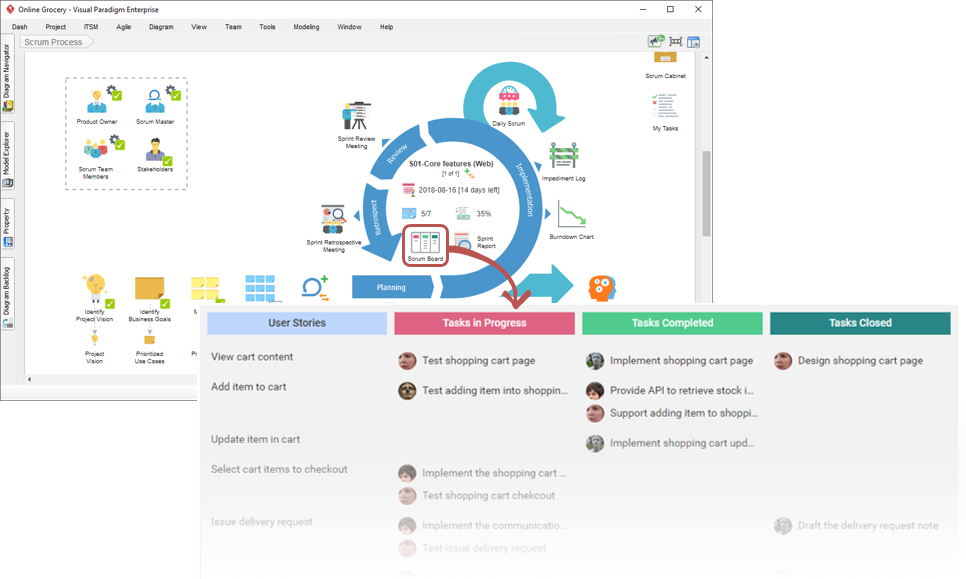
Continue readingScrum Process Canvas is a scrum tool built to help you manage your scrum project – from identifying project vision, through to final product delivery. Seamlessly navigate the entire scrum process in a single, beautifully designed scrum process canvas. Perform scrum activities quickly, easily and seamlessly. Keep the whole team fully engaged. Our agile software makes agile projects simple and effective.
Continue reading
The Scrum Process Canvas is a Scrum management tool. It presents actionable Scrum activities in a one-page process canvas. Team members perform activities to manage and complete software projects. The Scrum process Canvas is fully customizable, allowing you to add additional activities (such as certain meetings) and process deliverables (such as domain-specific logs) to the Scrum process to meet your specific project needs.
Continue reading
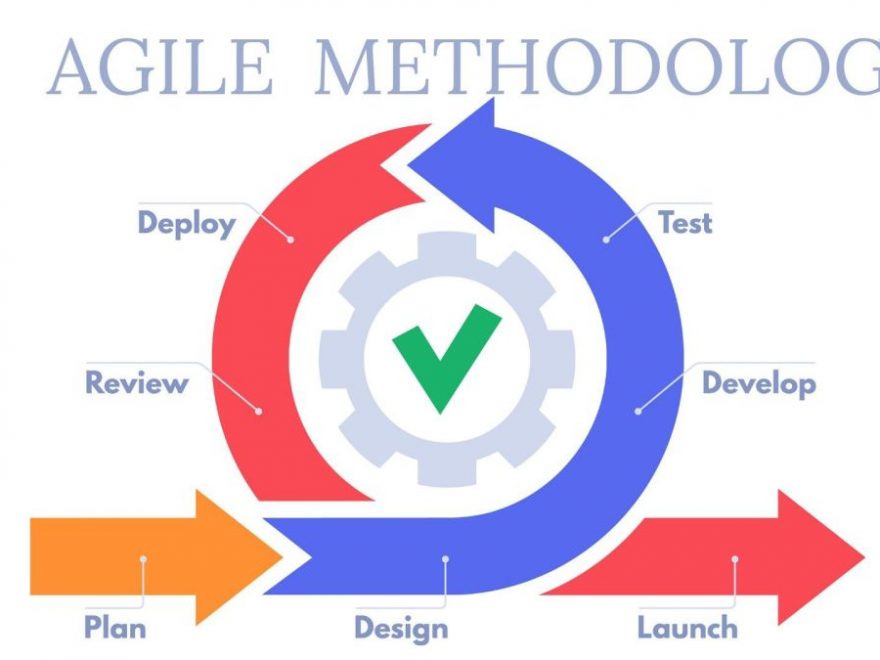
According to Scrum.org, a Sprint is a “month or less framework within which a “completed”, usable and potentially releasable product increment is created. The duration of a Sprint is consistent throughout the development effort. A new Sprint begins immediately after the previous Sprint ends…….
Continue reading
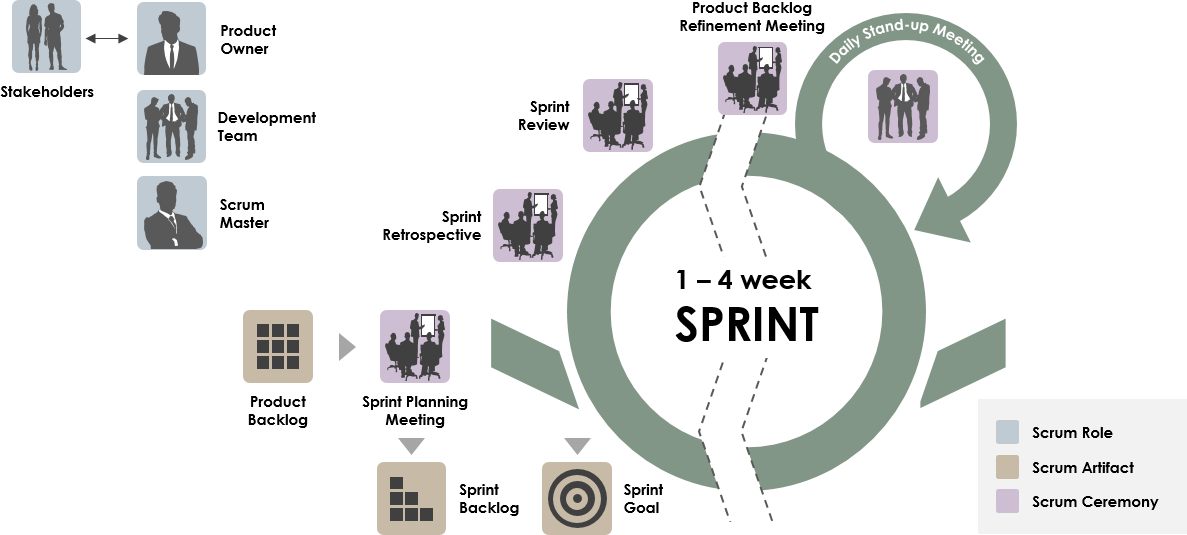
As described in the Scrum Guide, the Scrum framework consists of Scrum teams and their associated roles, events, artifacts, and rules. However, Scrum rules are not as easy to identify as roles, events, and artifacts. This list attempts to extract these rules for conducting Scrum events and provide them as a supplemental resource to the Scrum Guide.
Continue reading
The Sprint Retrospective occurs after the Sprint Review and before the next Sprint is scheduled. For a one-month sprint, this is a three-hour meeting at most. The retrospective meeting is basically an “improvement” meeting to find ways and means to identify potential pitfalls, past mistakes, and seek new ways to avoid them, with all people in attendance – product owners, Scrum Masters, development team members, and optionally with stakeholders.
Continue reading
The sprint planning meeting is held before the sprint begins. The purpose of this meeting is to define the sprint plan and set sprint goals. The sprint plan includes agreeing on the number of backlog items in the sprint that will be the responsibility of the development team, as well as determining the goals for the current sprint and sprint backlog.
Continue reading
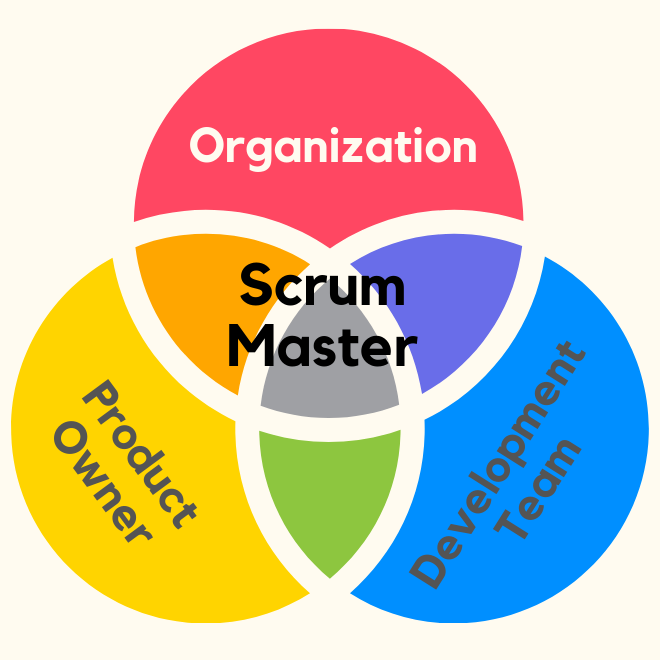
The Scrum Master is responsible for ensuring that everyone related to a project, whether chickens or pigs, follows the rules of Scrum.
Continue reading
Daily scrum meeting (called daily stand up meeting) is usually taken place every morning on each sprint, the time lasts approximately 15 minutes. In the scrum agile practice, the team will typically hold a meeting on time at 9:00 in the same place.
Continue reading
The objective of the day-to-day work of a sprint is to create shippable product increment for the product in a form that can be delivered to a customer or user. Within the context of a single sprint, a product increment or shippable increment means that a work product has been developed, integrated, tested, and documented according to the project definition of done and is deemed ready to release.
Continue reading